Pearl Street Publishing 1997-2012
For a number of years this was the Pearl Street Publishing website.
Content is from the site's archived pages providing a glimpse of what this site offered both to writers and readers.
Mission Statement of Pearl Street Publishing
Pearl Street Publishing was founded in 1996. The primary purpose of Pearl Street Publishing is to publish works which will transport the reader to an uplifting place. These works will not be limited by category. They will sometimes be reflective, sometimes challenging, sometimes beautiful, sometimes humorous, sometimes exciting and always compelling.
Pearl Street Publishing is dedicated to publishing the creations of people who dare to act on their dreams. There are those who say that there is no audience for such works; or, if there is, we will not be able to discover it. We knowingly accept this challenge.
Pearl Street Publishing is committed to producing books which will be reread and shared with others.
Sherry Seiber, Publisher
Pearl Street Publishing
Pearl Street Publishing is located on Old South Pearl Street in Denver, Colorado. We are housed in a Victorian house built before the turn of the 20th century. While we honor that heritage, we embrace the exciting technological revolution that has ushered us into the 21st century. We are committed to the proposition that all of us who love to read will benefit from these marvelous advances. In that spirit, we invite you to browse in the Pearl Street Publishing Online Book Store which we created in July of 2002.

Summer, 2011
Currents
Online Journal
Pearl Street Publishing
Sherry Seiber, Publisher
Spring, 2011
The Know Something Project, a sister site of Pearl Street Publishing, currently features an in-depth look at the growing, multi-faceted e-book industry. From e-readers such as the Kindle and the Sony Reader to retailers such as Fictionwise and ScribD (and the players such as Simon and Schuster (which just signed on to sell digital copies of some of its titles on ScribD) and Google, e-publishing is on the brink of something big.
ReadGreen is a new initiative that encompasses aspects of electronic as well as print-on-demand publishing. For more information, read Currents, a comment on technology and the independent press-the last bastion of freedom of expression.
The Gutenberg Project is a must view for all readers. It is a volunteer effort which has produced 25,000 free e-books which are accessible without limitation. These books' copyrights have expired.
The distinction which the Project makes between free of charge and freedom of use is fascinating in this era of "monetizing" everything. From The Gutenberg Project website:
February 4, 2009
Amazon's Kindle e-book reader is wondrous and elitist. It is wondrous because a reader can download books directly to the Kindle within 30 seconds anywhere anytime. Recently, I read John Updike's obituary on Kindle and downloaded his last book, The Widows of Eastwick, while sitting by the ocean. In the middle of the night when the reality of the next great Depression sets in, I have downloaded John Adams by David McCullough, The Great Depression and the New Deal by Eric Rauchway, and Bad Money by Kevin Phillips. These titles and others I have downloaded range from $1.50 to $9.99 which are substantially less than hard copies of the same books. There is no monthly fee for the whispernet radio wave service that brings the books to your Kindle without the need for computer hook up or wifi hot spot.
It is elitist, however, because the Kindle costs $349.00 and can only access Amazon's designed-for- Kindle books. Unlike Adobe's PDF format, which is uniformly available, Kindle e-books are not. While we at Pearl Street Publishing have begun designing our books as Kindle books without having to pay fees, the Kindle daily blog continue to discuss the same authors and publishers who dominate Amazon and other book retailers. Tom Clancy was added to the list of exciting new Kindle authors today. Presumably publishers pay Amazon for such advertisements as well as placements as "other books" a reader may be interested in. It is curious that the book business, in dire straits for many years, would change nothing about their business model except the distribution. Kindle/Amazon receives 65% of the book price.
+++
Check this: Jump ahead to the present and it nice to note that the Kindle proved to be so successful that its price has dropped noticeably. Of course you could buy a fancy Kindle Oasis E-reader with a 7" High-Resolution Display (300 ppi), Waterproof, Built-In Audible, 8 GB, Wi-Fi for over two hundred dollars, but there are also much less expensive Kindle models now. My favorite is the Kindle E-reader for under $100. And of course there is now a Kindle app for your phone and other table devices. I just finished a move for my parents from their home in DC to Hart Heritage Estates, a senior living facility in Maryland where I live. A year earlier I had scouted all the local homes for seniors in the Bel Air area of Maryland. I was interested in Hart Heritage Estates because not only did they have assisted living options, they also offered respite care. I was considering moving my parents in with me and wanted to have the option in case I needed to take some time off to take care of myself. But after discussing the idea of my becoming the main care taker form my elderly parents, we all decided that it would be better for all of us if they moved into a home for seniors. I introduced my parents to reading books on a kindle. Being able to increase the font size made a huge difference for them. My mother who was a prolific reader adjusted quickly to this new method of reading. She loved the fact that she could make the font larger and was surprised when she saw how the back lighting behind the copy gets lighter or darker depending upon where she was reading. My father complained a bit, but finally also adapted.
In 2009 Sherry Seiber, Publisher of Pearl Street Publishing was spot on to recognize the juggernaut that e books would become. The convenience and ease of access to thousands of books is overwhelmingly seductive to readers everywhere. My parents still own books, but they now do the majority of their reading from their kindles.
+++
Change has come to the book business; there is no doubt of that. HarperCollins' earnings are predicted to be down 90% at the end of their fiscal year in June of 2009. Now is the time to make change meaningful. The wondrous technology behind Amazon's Kindle could be used to inform the reading public of fresh voices from independent presses as well as the already well-known authors from mega media corporations. As we celebrate Black History Month in 2009, we recommend two books whose authors are the change. One Sister's Song by Karen DeGroot Carter and Lady Bird by Sheryl Mebane. Both these books deserve to be read.
ReadGreen
As we watch the global markets in turmoil and hear we are on the brink of another world-wide Depression, it is time to ReadGreen. We recently launched Offerte, The Burnt Offerings by Jon Marie Broz, a poetry collection, whose varied formats reflect Pearl Street Publishing's ReadGreen concept. Offerte is available in hardback or paperback via print-on-demand technology. A reader can purchase either format when ordering Offerte through Amazon. The book is then printed and dropped-shipped within 48 hours. Offerte and other Pearl Street books are available as Kindle e-books, as well.
There is more to ReadGreen than saving the paper and fossil fuels required to distribute hard copies of books. The revolutionary aspect of reading green centers on our belief that individual freedom of expression must be advanced throughout the world. We were pleased to be recognized by the Yale Review as an independent press publishing new voices that deserve to be heard. But recognition of the historical fact that the "independent press" has always been at the forefront of publishing fresh voices and new ideas, is not enough.
Through ReadGreen, we are committed, not only to utilizing technology to produce and distribute the written word, but to tearing down barriers to freedom of expression wherever they exist.
Always Current
Pearl Street Publishing is located on Old South Pearl Street in Denver, Colorado. We are housed in a Victorian house built before the turn of the 20th century. While we honor that heritage, we embrace the exciting technological revolution that has ushered us into the 21st century. We are committed to the proposition that all of us who love to read will benefit from these marvelous advances. In that spirit, we invite you to browse in the Pearl Street Publishing Online Bookstore, which was created in July of 2002, so long ago that PayPal was not yet owned by E-Bay.
Submissions to Pearl Street Publishing
|
Pearl Street Publishing's

Dedicated to Hannah Amgott

Pearl Street Publishing is dedicated to publishing the creations of people who dare to act on their dreams. It is in this spirit that we instituted the First Book Contest. This contest will be renewed in the spring of 2012.
Previous winners
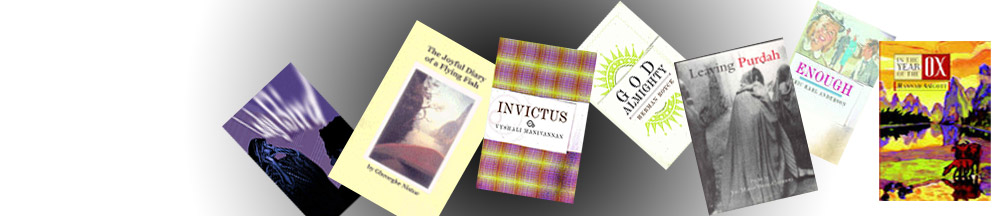
-Hannah Amgott click: In the Year of the Ox, memoir and poems
-Eric Anderson: Enough, a novel.
Pearl Street Publishing Writing Fellowship

The Inspiration
The Pearl Street Publishing Writing Fellowship evolved as we developed our publishing venture. Our mission to publish the works of those "who dare to act on their dreams" has attracted a number of works by people who are not professional writers. In some instances, we have received submissions which have such promise that we decided to create a writing fellowship. The fellowship provides the writer with the editorial support required to produce a publishable manuscript. The Writing Fellowship also provides a stipend and, upon completion of the Fellowship, an offer of a Pearl Street Publishing contract.
To qualify for a writing fellowship the applicant must have completed a work and have a profession other than writing . We consider all of life’s important work a profession. Parenting, homemaking, and care taking are obviously included. Indeed, the inspiration for The Pearl Street Publishing Writing Fellowship is Nellie Kollister, maternal grandmother of the publisher, Sherry Seiber. She was a mother and homemaker in rural Ohio in the first half of the twentieth century. Yet, she somehow found the time and energy to organize a family band and to write poetry. Although she died when her granddaughter was a year old, her legacy lives on vividly in her poetry.
The Recipients
Sheryl Mebane was the first recipient of the Pearl Street Publishing Writing Fellowship for her novel, Lady Bird. Sheryl received her PhD in Chemistry from Berkeley in 2003. To order and learn about Lady Bird and her author click:

|
With one breath, a story of three women begins in word and sound. Honey, a songbird of rare quality, soars out of segregated Eastern North Carolina only to face deep betrayal and the high price of her talent. Her daughter Passion writhes under Honey’s shadow, taking dangerous turns to avoid the musical salvation that is her birthright. At a desperate time, a straight-laced stranger named Freida enters Passion’s world and becomes, in one afternoon in Brooklyn , the chance for peace that Honey defies death to seize. In the final section, “Naming thunder and wind,” Freida’s past threatens Honey’s supernatural intervention in a struggle for Freida’s identity and her newly freed heart. |
|
__________________________________________________________ Sheryl’s life has been marked by the ebb and flow of three main pursuits: music, writing and chemistry. Sheryl Mebane was born and grew up in North Carolina he has two older sisters and both her parents are retired high school science teachers. Early in school, she seized upon revelations of the mysteries of music, which gave her a sense of the power behind what she heard around her. She also explored language, expressing herself through creative writing, and was first published in a statewide collection of student writing at eight years old. She began melding her musical and literary interests in a high school project in which she composed percussion music inspired by the works of James Baldwin and performed the composition for a school assembly. Sheryl also presented a chemistry research project that systematically tested materials for drumheads to the International Science and Engineering Fair. She gave the commencement address at her NC School of Science and Mathematics high school graduation after a draft of the speech won her the honor. |
Vyshali Manivannan for her novel Invictus which she describes as being "the story of a bioroid, or living robot, named Phalanx-his conflicts with himself and his environment, his struggles with identity , his search for deeper meaning." In addition to being a talented young writer, Manivannan was recognized early for achievements in the scientific field and planned to pursue this interest in college. Her intent in writing Invictus was "to show that moral decency is crucial to science and that the strength of human emotion cannot be underestimated." She has changed her career path to writing.

|
|
About the Author Vyshali Manivannan attends Dartmouth College, where she is pursuing a bachelor’s degree in English. The daughter of a Physics professor, Vyshali decided to become a writer at age eleven. She wrote and completed Invictus by age fifteen, when she won a Pearl Street Publishing Writing Fellowship. “Since the completion of Invictus,” Vyshali notes, “I have drafted the first two novels of a planned trilogy, separate from Invictus. Because I can’t help multitasking, the third of the trilogy is temporarily on hold and currently I am working on another, separate novel. I am majoring in English and am considering pursuing a career in writing and perhaps in teaching, as well.” Vyshali Manivannan on Travel and Writing Japan Two summers ago, I spent three months in Japan on a language study sponsored by Dartmouth, and I shared my experiences with two homestay families and roughly fifteen of my classmates. I was doubly foreign—American and Sri Lankan—in a country suspicious of foreigners, but a country that nevertheless welcomed me as a visitor, a student, an observer, and a writer. It was difficult to establish a niche for myself in Japanese society, but I loved the country itself: its punctual transportation, the rush of suited men and women through its train stations and its streets, the press of people on Tokyo’s Yamanote train at seven-thirty in the morning. Tokyo became for me a home, a place to watch businessmen as they jostled for seats on trains or strode through the dripping summer heat armed with three layers of clothing as a guard against evidencing sweat. I am in love with big cities and with their people, and Tokyo is the epitome of that. Sri Lanka The following winter, I traveled with my family to Sri Lanka, the homeland of my ancestors, for the first time. We drove to Batticaloa in the half-light of a waning moon and a handful of stars, surrounded by a natal presence of language that never before existed for me outside my home. The roads were without demarcation; cars and motorcycles and bicycles (often with two clutching at a seat and maybe a third upon the handlebars) raced in all directions, claiming all parts of a no-lane road. There was the quick sudden illumination of six large grayish bodies, trunks half-lifted quizzically, eyes ghostly pale in the peripheral flash of headlamps. I spent a month in Batticaloa among relatives whom I had never seen before, and the entire trip was like that: swift realizations and illuminations, as vast as elephants on the side of the road. My heritage is something I now recognize and accept. Formerly this was not always the case. Italy Italy’s air was crisp when I flew into Rome last year. The houses were mud-pink or white, the green palm trees a gentle contrast against the blue sky. Landing in the airport, I caught a glimpse of a stripped sea like a block of cerulean without sand or skyline to ground it. I visited the tourist attractions of Rome, Florence, and Venice. Italy’s art snatched my breath and left my fingers weak for inspiration and wanting ability. There is nothing more powerful than witnessing the grand masters; there is nothing more insidious than admiring the work of the masters and comparing it to your own. I discovered I am also in love with smaller cities, artistic hubs throbbing with life from a variety of countries. Florence claimed me for its own, and the waters of Venice reflected sun and gondoliers’ songs, hypnotic in the fishy air. France I visited Paris after Italy and was compelled to love its people. It was the city that, for years, I had idealized as a center of art and sophistication, where authors would sit street-side in cafes, cradling notebooks in their laps, sipping espresso, observing the tides of life around them. The city did not disappoint me. It was there that I felt completely at ease as a writer for the first time. I was the recipient of more than a few knowing smiles. The waitresses did not hurry me. I suspected that others of my kind frequented cafes like this, and the thought was encouraging. Life seemed less lonely, in Paris . Ireland I spent the last three months on a Dartmouth foreign study program, studying English literature in Ireland. I took courses at Trinity College in Dublin and shared a house on the outskirts of the city with four other Dartmouth students. After having experienced cities like Rome, Florence, and Paris, though, Dublin was slightly disappointing. I had expected a city; I discovered a large town. Still, I enjoyed it thoroughly and my experience was a rewarding one. Dublin was dirty, crowded, filled with jovial faces and bodies draped in sweaters and coats and hurrying to offices and shopping malls. The winter season was marked with spiking rain and sharp, biting winds. The ongoing sense of independence and the slow pace of classes left me plenty of time to dedicate to my own projects and to exploring the countryside. Ireland’s countryside was beautiful, deeply green and fresh, and the Irish people were extremely friendly and helpful. There was an instant sense of belonging as soon as I stepped onto Irish soil. Future Plans Studying and living abroad have helped me develop as a person and have also honed my skills and discipline as a writer. My latest adventure involves traveling on a grant from Dartmouth to write a historical fiction story based in my ancestral home of Sri Lanka. |
More Background On PearlStreetPublishing.com
PearlStreetPublishing.com served for many years as the digital home of Pearl Street Publishing, an independent literary press based in Denver, Colorado. Although the site is no longer active in its original form, archived material and public records paint a vivid portrait of a small but ambitious publisher with a clear artistic vision, a strong commitment to emerging writers, and an early embrace of the digital reading revolution.
Operating roughly between 1997 and 2012, the website functioned not just as a catalog of offerings but as a cultural manifesto: championing independent voices, critiquing the shifting economics of publishing, promoting eco-conscious reading initiatives, and exploring the societal implications of digital books.
The following comprehensive article brings together its history, mission, programs, authors, cultural significance, and the broader industry environment in which Pearl Street Publishing operated.
Founding and Mission
Pearl Street Publishing was founded in 1996 with a mission that differentiated it sharply from more commercially driven presses. Its stated purpose was to publish works that would “transport the reader to an uplifting place,” regardless of genre or market trends. This philosophy meant the company welcomed narratives that were reflective, challenging, beautiful, humorous, exciting, or emotionally compelling—often simultaneously.
The publisher, Sherry Seiber, positioned the company as a sanctuary for writers who dared to pursue creative dreams despite uncertain commercial prospects. At its core, the mission emphasized:
-
Literary courage — supporting creators who write from vision rather than marketplace conformity.
-
Longevity of reading — producing books intended to be reread, treasured, and shared.
-
Cultural uplift — valuing storytelling that offered meaning, inspiration, and emotional resonance.
This mission set the tone for the publishing list, the competitions, and the fellowship programs that emerged from the imprint.
A Unique Physical Setting: Old South Pearl Street
One distinct and memorable aspect of Pearl Street Publishing was its location. The press operated from a Victorian house on Old South Pearl Street in Denver, a structure built before 1900. This historic environment lent the organization a sense of continuity with the past—an element explicitly acknowledged on its website.
At the same time, Pearl Street embraced the technological revolution of the early 21st century. The website expressed excitement about the way innovations such as e-books and print-on-demand technologies could support independent voices and broaden access to literature. This contrast—Victorian architecture paired with cutting-edge publishing modalities—was part of the company’s identity.
Website Structure and Offerings
PearlStreetPublishing.com served as an informational hub and online storefront. Over time, the site expanded to include:
Online Bookstore
Launched in July 2002, the online bookstore allowed readers to purchase Pearl Street titles in physical and digital formats. At a time when e-commerce was still gaining traction, this was a forward-looking step for a small press.
Currents: The Online Journal
“Currents” offered commentary on:
-
Technological developments in publishing
-
The rise of e-book platforms
-
Shifts in distribution models
-
The importance of independent presses in protecting freedom of expression
These posts often blended industry critique with cultural analysis and reflected the publisher’s deep engagement with evolving reading habits.
ReadGreen Initiative
This initiative recognized environmental concerns but expanded the definition of “reading green” beyond sustainability. It emphasized:
-
Digital distribution as a way to reduce the environmental footprint
-
Freedom of expression, asserting that technology should expand, not restrict, literary access
-
The value of making books available in multiple formats, including print-on-demand, which reduced waste by avoiding large, unsold print runs
Pearl Street tied the initiative to broader social issues, arguing that independent presses had a role in safeguarding diverse voices.
Submission Guidelines
The press maintained an open submissions policy, unusual for small publishers, which often rely solely on agented manuscripts. Writers were invited to:
-
Submit a query summarizing the completed manuscript
-
Include a concise biography
-
Send materials directly in the body of the email
This accessibility encouraged new and unpublished writers to engage.
First Book Contest
Pearl Street Publishing periodically held a “First Book Contest” to identify exceptional debut manuscripts. Winners included:
-
Hannah Amgott for In the Year of the Ox
-
Eric Anderson for Enough
The contest reflected the press’s dedication to cultivating new literary talent.
Writing Fellowship Program
One of the most distinctive features of Pearl Street Publishing was its Writing Fellowship, created to support gifted writers who lacked traditional literary backgrounds. This fellowship:
-
Provided editorial support
-
Offered a stipend
-
Culminated in a publication contract
The program was inspired by Seiber’s grandmother, Nellie Kollister, whose life as a homemaker, poet, and family musician embodied the idea that creativity can emerge from any walk of life.
Notable Authors and Works
Pearl Street Publishing developed a small but compelling catalog of fiction, poetry, and memoir.
Sheryl Mebane — Lady Bird
One of the most celebrated authors published by the press, Sheryl Mebane, was both a chemist and a writer. Her novel Lady Bird explores the interconnected lives of three women—Honey, Passion, and Freida—through a musical, jazz-infused narrative structure.
Mebane’s background is richly interdisciplinary:
-
PhD in Chemistry (UC Berkeley)
-
Composer and jazz musician
-
Lifelong writer with early publication credits
-
Recipient of the inaugural Pearl Street Writing Fellowship
Her life story, blending science and art, embodied the press’s ethos of embracing diverse creators.
Vyshali Manivannan — Invictus
Manivannan authored Invictus, a novel written when she was only fifteen years old. The book explores the identity and emotional life of a “bioroid”—a living robot—navigating existential conflict in a technologically advanced world.
She later:
-
Studied English at Dartmouth College
-
Wrote multiple additional novels
-
Explored themes of moral responsibility in science
-
Engaged in global travel that deeply informed her writing
Her work exemplifies Pearl Street’s support for young and unconventional voices.
Other Works
The press published a variety of genres, including:
-
Poetry collections
-
Memoirs
-
Literary fiction
-
Culturally themed works
-
Digital-first titles during the rise of e-books
Several titles were cross-released in print-on-demand and Kindle formats—significant at a time when small presses were still navigating the digital shift.
Technology, E-Books, and Industry Commentary
PearlStreetPublishing.com featured unusually rich reflections on the future of books. The publisher wrote candidly in 2009 about the transformational role of Amazon’s Kindle—praising its convenience and accessibility while critiquing its proprietary format and the limited ecosystem it created.
The site explored topics such as:
-
The democratizing potential of digital reading
-
Problems with publisher–retailer economics
-
How independent voices risk being overshadowed by larger corporate publishers
-
The role of pricing in attracting new readers
-
The environmental and social implications of print vs. digital
One memorable commentary described downloading John Updike’s obituary and last novel instantly while sitting by the ocean—an example of how revolutionary the Kindle felt in its early years.
At the same time, the site criticized Kindle’s closed marketplace and the dominance of major publishers, making nuanced arguments about literary access and distribution.
Cultural and Social Significance
Pearl Street Publishing’s significance extended beyond its catalog. It contributed to:
1. The Independent Press Movement
The website argued that independent presses were the “last bastion of freedom of expression.” Its ReadGreen initiative and editorial essays highlighted how small publishers could champion voices and stories ignored by mainstream media.
2. Democratization of Creative Opportunity
Programs like the Writing Fellowship and First Book Contest drew creators from all backgrounds—including homemakers, students, scientists, and young prodigies—reflecting a belief that literature is enriched by diverse lived experiences.
3. Early Digital Adoption
By embracing:
-
E-books
-
Print-on-demand
-
Online sales
-
Commentary on the technological future
the press stood at the forefront of small-press innovation.
4. Engagement With Global Literature and Literacy
The site promoted the Gutenberg Project and advocated for “free as in freedom” access to literature. This aligned Pearl Street Publishing with early digital-rights discussions and literacy advocacy.
Audience and Readership
The site appealed to multiple reader groups:
-
Literary fiction enthusiasts drawn to character-driven, emotionally rich narratives
-
Readers concerned with social issues, identity, and cultural storytelling
-
Digital adopters wanting Kindle- and eReader-compatible works
-
Writers seeking a supportive press with open submissions
-
Academics and educators, given the company’s emphasis on freedom of use and public-domain literature
-
Poetry readers and those interested in emerging voices
PearlStreetPublishing.com also attracted visitors searching for lesser-known but meaningful stories—people who valued authenticity over mass-market formulas.
Popularity and Reach
Although a small independent press, Pearl Street Publishing reached a national audience, thanks in part to:
-
Its early adoption of digital distribution
-
Online visibility through its bookstore and journal
-
The rising popularity of e-readers
-
Publicity generated by award-winning authors
-
Cross-references on author websites, university listings, and literary blogs
Many readers discovered the press through its more widely recognized authors or via commentary pieces that circulated among literary circles during the e-book boom of the late 2000s.
Legacy and Present Status
Even though the original site is no longer active, PearlStreetPublishing.com’s archived content remains a meaningful snapshot of early independent digital publishing. Its contributions include:
-
Championing diverse, emerging talent
-
Advocating for freedom of literary expression
-
Anticipating major industry trends, including print-on-demand and digital publishing
-
Cultivating community and conversation around reading and writing
-
Providing opportunities for nontraditional authors to gain recognition
Today, former Pearl Street authors continue to publish, teach, perform, and create, extending the press’s influence long after the website transitioned into an archive.
PearlStreetPublishing.com was far more than a simple publishing website—it was a curated, thoughtful literary space that bridged the gap between historic, handmade book culture and rapidly evolving digital innovation. Its mission-driven approach, support for new authors, critical engagement with the publishing industry, and commitment to technology made it an important part of the early 21st-century independent press landscape.
Through programs like the First Book Contest and the Writing Fellowship, it opened doors for writers who might otherwise have struggled to find support. Through its commentaries and initiatives like ReadGreen, it contributed to conversations about environmental sustainability, digital freedom, and the future of reading.
Though now preserved primarily in archived form, PearlStreetPublishing.com represents an important chapter in the story of American independent publishing—one driven by passion, idealism, and a belief in the transformative power of books.